
Pain Scale Faces Printable
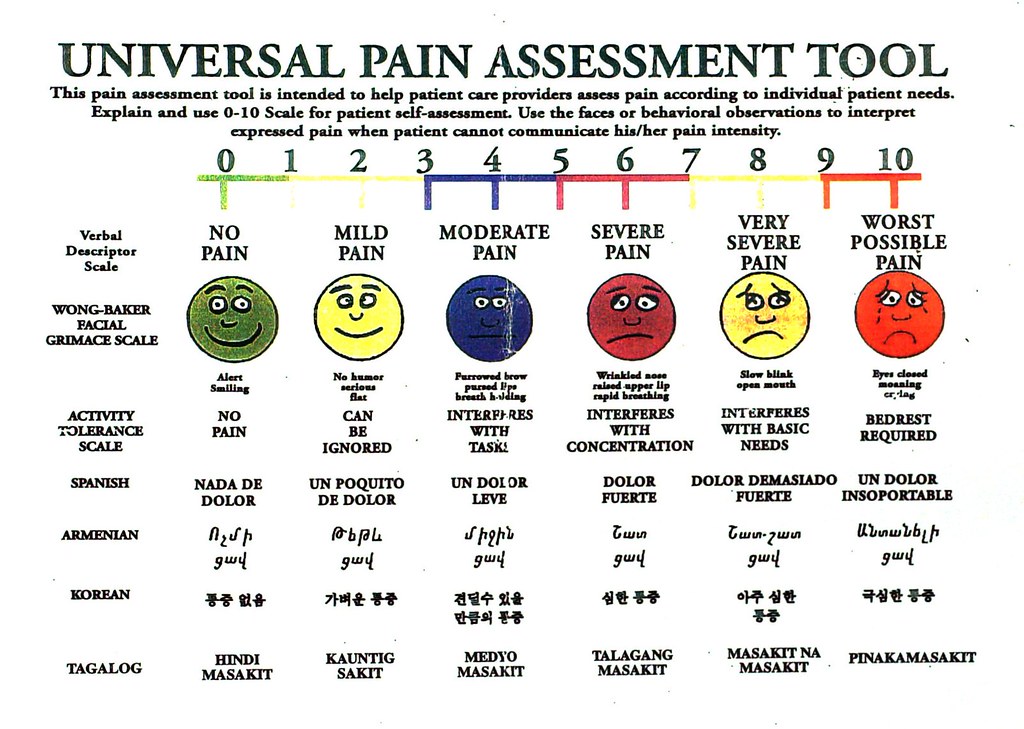
Pain Scale Faces Printable - Face 5 hurts as much as you can image. Explain to the patient that each face is for a person who feels happy because he has no pain (hurt or, whatever word the patient uses) or feels sad because he has some or a lot of pain. The face on the left shows no pain. Diagnosing what may be the cause. [4] a 10 point 'crying face' represents the worst possible or most excruciating pain. Face 3 hurts even more.
Adults and children (> 3 years old) in all patient care settings. Web explain to the person that each face is for a person who feels happy because he has no pain (hurt) or sad because he has some or a lot of pain. Face 2 hurts a little more. Pain is felt differently from one person to the next ranging from mild to severe and varying in type. Ask the child to choose the face that best describes his or her own pain, and report the appropriate numbers to your nurse.

A pain scale for every season 7 years to diagnosis
Web ask the person to choose the face that best describes how he is feeling. 3) each shift in resident with pain. Point to each face using the words to describe the pain intensity. Web instructions for faces pain rating scale. Choose a number from 0 to 10 that best describes your pain:

Describe Your Pain With Pain Scale Learn Pain Scale Types, levels
Face 6 hurts even more. A 0 point 'happy face' represents the absence or lack of pain. Use the faces pain scale. 3) each shift in resident with pain. Face 5 hurts as much as you can image.

Cureus Phase 2 Assessment of a New Functional Pain Scale by Comparing
“the faces show how much pain or discomfort someone is feeling. Point to each face using the words to describe the pain intensity. At initial intake/admission to services. Ask the child to choose face that best describes own pain and record the appropriate number. 3) each shift in resident with pain.
Free Printable Pain Scale Chart Templates Printable Download
3) each shift in resident with pain. “the faces show how much pain or discomfort someone is feeling. Face 0 is very happy because he doesn’t hurt at all. Web instructions for faces pain rating scale. Face o doesn't hurt at all.

So what is pain anyway? « My Weird And Wacky Life
Web explain to the person that each face is for a person who feels happy because he has no pain (hurt) or sad because he has some or a lot of pain. Face 1 hurts just a little bit. Ask the child to choose face that best describes own pain and record the appropriate number. Rating scale is recommended for.
Pain Scale Faces Printable - Originally published in whaley & wong’s nursing care of infants and children. Ask the child to choose face that best describes own pain and record the appropriate number. Pain is felt differently from one person to the next ranging from mild to severe and varying in type. Face 4 hurts a little bit more. Some studies show african americans and asians prefer the faces pain scale. What is a faces pain scale?
Web the faces scale is widely used with people ages three and older, not limited to children. History of the faces scale. What is a faces pain scale? At initial intake/admission to services. Ask the child to choose face that best describes own pain and record the appropriate number.
A Person Describes Their Level.
Some studies show african americans and asians prefer the fps. Ask the child to choose face that best describes own pain and record the appropriate number. Web the faces scale is widely used with people ages three and older, not limited to children. [4] all the faces in between represent a scoring of 2, 4, 6, or 8, respectively, based on the pain severity facial image chosen.
History Of The Faces Scale.
Face 2 hurts just a little bit. Pain scales are used by healthcare providers to improve communication and understanding about the pain you may be experiencing. Diagnosing what may be the cause. “the faces show how much pain or discomfort someone is feeling.
Adults And Children (> 3 Years Old) In All Patient Care Settings.
Choose a word that best describes your pain: Web the faces pain scale is a visual diagram that includes faces representing each level of pain. Face 4 hurts a whole lot. Originally published in whaley & wong’s nursing care of infants and children.
Face 2 Hurts Just A Little Bit.
Web ask the person to choose the face that best describes how he is feeling. 3) each shift in resident with pain. Face 3 hurts even more. 2) at each quarterly nursing review.